
October in Hempstead Village is the sweet spot. Warm enough to work in the crawl space without gloves, cold enough to remind you what is coming. Every year we get the same January calls from the same streets, and every year the homeowners say the same thing: "I meant to do that in the fall." This is the list. Work through it on a Saturday and your plumbing goes into winter ready.
Outside first: hoses, bibs, and sprinklers
Start where winter hits first.
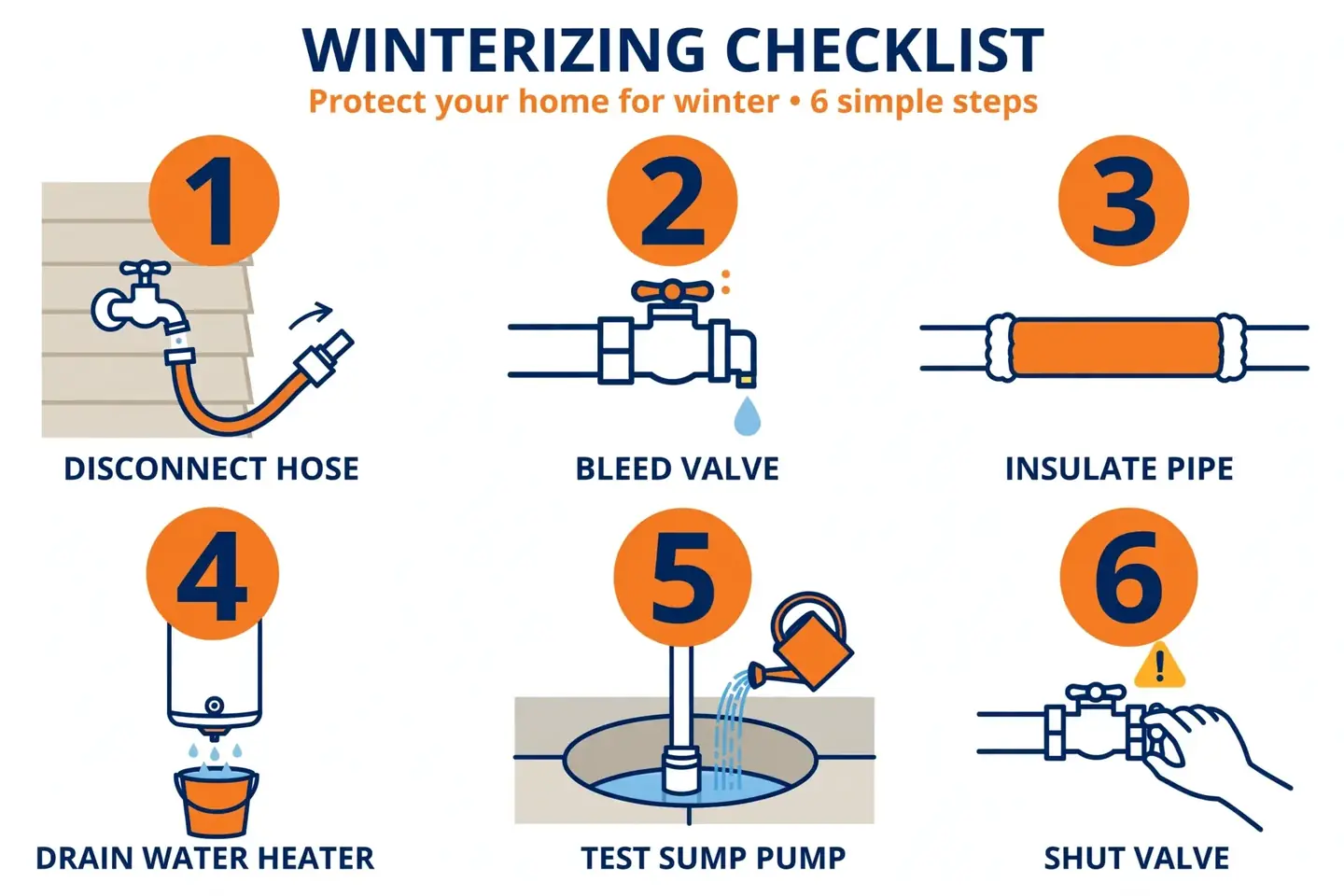
Disconnect every garden hose. A hose left attached traps water in the line behind the bib. That water freezes, expands backward into the wall, and splits the pipe inside where you cannot see it. Disconnect, drain, coil, store in the garage. This five minute job prevents the single most common freeze call we run.
Shut off and drain each outdoor faucet, including the bleeder cap. Most Hempstead homes have an interior shutoff valve for every hose bib, usually in the basement near where the line goes out through the wall. Here is the step most guides skip: that interior valve has a small bleeder cap on its side. After closing the valve and opening the outside faucet, loosen that bleeder cap and drain the water trapped in the short pipe section between the valve and the outside wall. Skip this and water sits in that dead leg all winter, freezes, and splits the pipe right where it passes through your sill plate. Then leave the outside faucet open all winter. A $10 foam bib cover on top is cheap insurance, but it is not a substitute for draining.
Blow out the sprinkler system if you have one. Underground sprinkler lines hold water in every low spot. A compressor blowout clears them. Skip it and you will find cracked heads and split lines in April.
The unheated spaces: basement, crawl space, garage, attic
This is where Hempstead's pre 1960 homes get you. Pipes run through spaces the original builder never expected to stay warm.
Insulate every exposed pipe you can reach. Foam sleeves cost $1 to $3 per linear foot and go on in an afternoon. Focus on the basement ceiling runs, anything in the crawl space, pipes along garage walls, and lines in the attic. If you did this from our frozen pipe prevention guide, you are ahead. If not, this is the weekend.
Seal the air leaks around pipes. Insulation means nothing if cold air is pouring through the gap where the pipe passes through the sill plate or the foundation wall. A $6 can of expanding foam or a tube of caulk closes the gaps that matter. Check where pipes enter through exterior walls, around basement windows, and at the rim joist.
Heat tape the worst sections. The pipe that froze in 2023, the run along the unheated garage wall, the kitchen line on the north side. Self regulating heat cable runs $35 to $80 for a 25 foot roll, plugs into a standard outlet, and only draws power when the temperature drops. Buy cable listed for water pipes. Never run it on an extension cord.
Water heater: the hardest working appliance in winter
Your water heater works overtime from December through March. Incoming water is colder, so every shower and every load of laundry demands more heating. Fall is when you give it attention.
Flush a few gallons from the drain valve. Sediment settles at the bottom of the tank all year. A quick flush clears it, improves efficiency, and lets you spot rust or discoloration in the water coming out, which is an early warning the tank is aging. If the water runs rusty, have the unit checked. The average tank lasts 8 to 12 years, and most Hempstead basements have one quietly approaching that range.
Check the temperature setting. 120°F is the target. Hot enough for the house, not so hot it scalds or wastes energy. While you are there, lift the test lever on the temperature and pressure relief valve briefly. It should release a burst of water and snap shut. If it drips afterward or does nothing at all, the valve needs replacing.
Look for rust and moisture. Rust streaks down the side of the tank, moisture at the base, or a pilot that keeps going out are all "call before January" signals. A water heater repair in October is a scheduled visit. The same repair in January is an emergency call with no hot water.
Sump pump: test it before you need it
Long Island's high water table plus fall rains plus winter thaws means Hempstead basements lean on sump pumps hard. A pump that sat idle all summer can seize exactly when you need it.
Pour a bucket of water in the pit. The float should rise, the pump should kick on, and the pit should empty in under a minute. If it groans, runs slowly, or does nothing, address it now. Check the discharge line outside too. It should be clear and pointed away from the foundation. A frozen or blocked discharge line in January turns your sump pump into a very expensive decoration.
Consider a battery backup. Winter storms knock out power, and power outages plus melting snow are the exact combination that floods basements. A battery backup pump runs $300 to $600 installed and buys you hours of protection when the grid goes down.
Inside the house: the 30 minute walkthrough
Find and test your main shutoff, gently. Everyone in the house should know where it is and how to turn it. Here is a Hempstead specific warning: the Village has flagged 733 service lines for lead replacement, and many pre 1960 homes still have their original brass gate valves and lead gooseneck connectors. These old valves seize solid after decades. Do NOT force a stuck valve with a wrench in January. Forcing it can snap the valve body or crack a lead connector, turning a test into an emergency. If your main valve will not turn by hand, call a plumber in the fall for a controlled replacement. A planned valve swap runs $120 to $250. A snapped valve in a freeze emergency costs thousands.
Check under every sink. Look for slow drips at supply connections, green corrosion on copper, and damp cabinet floors. Small leaks become big problems when cold makes materials contract. Tighten what you can, flag what you cannot.
Clear slow drains now. A drain that is sluggish in October can freeze solid in January if the slow spot is in a cold section of pipe. Get drain cleaning handled before the holidays, not during them.
Know your heat plan. Thermostat stays at 55°F minimum all winter, even when you are away for the weekend. Open cabinet doors under sinks on exterior walls during deep cold snaps. These two habits prevent more freeze calls than any product you can buy.
The bottom line
Winterizing is not one big project. It is a dozen small ones, none taking more than an hour, all doable on a single October Saturday. Hoses off, pipes insulated, water heater flushed, sump pump tested, shutoff located. Do the list now and January is just cold. Skip it and January is expensive.
Want it all handled in one visit? Call +1 (516) 969-2004. Our fall winterizing walkthrough covers every item on this list, and we have been getting Hempstead Village homes ready for winter for 20+ years.